
Risqly
The Operating System for SaaS Renewals and Retention
Details
- Follow on
- Categories
- Analytics & MonitoringCRM
- Use Cases
- Risk ManagementData Integration
- Target Audience
- B2B SaaS CompaniesCustomer Success TeamsSaaS Founders
- Pricing
- Free
- Platforms
- Web
About Risqly
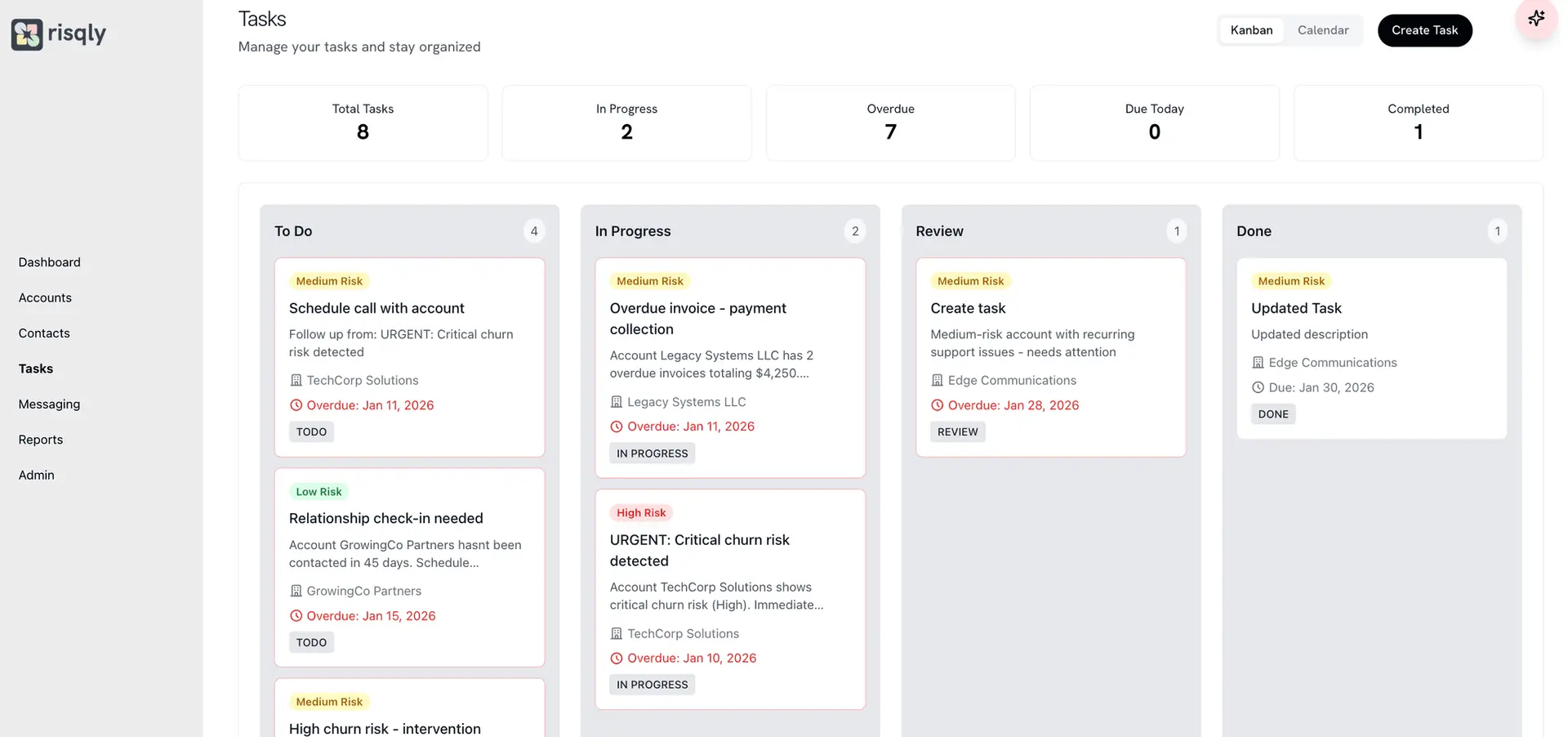
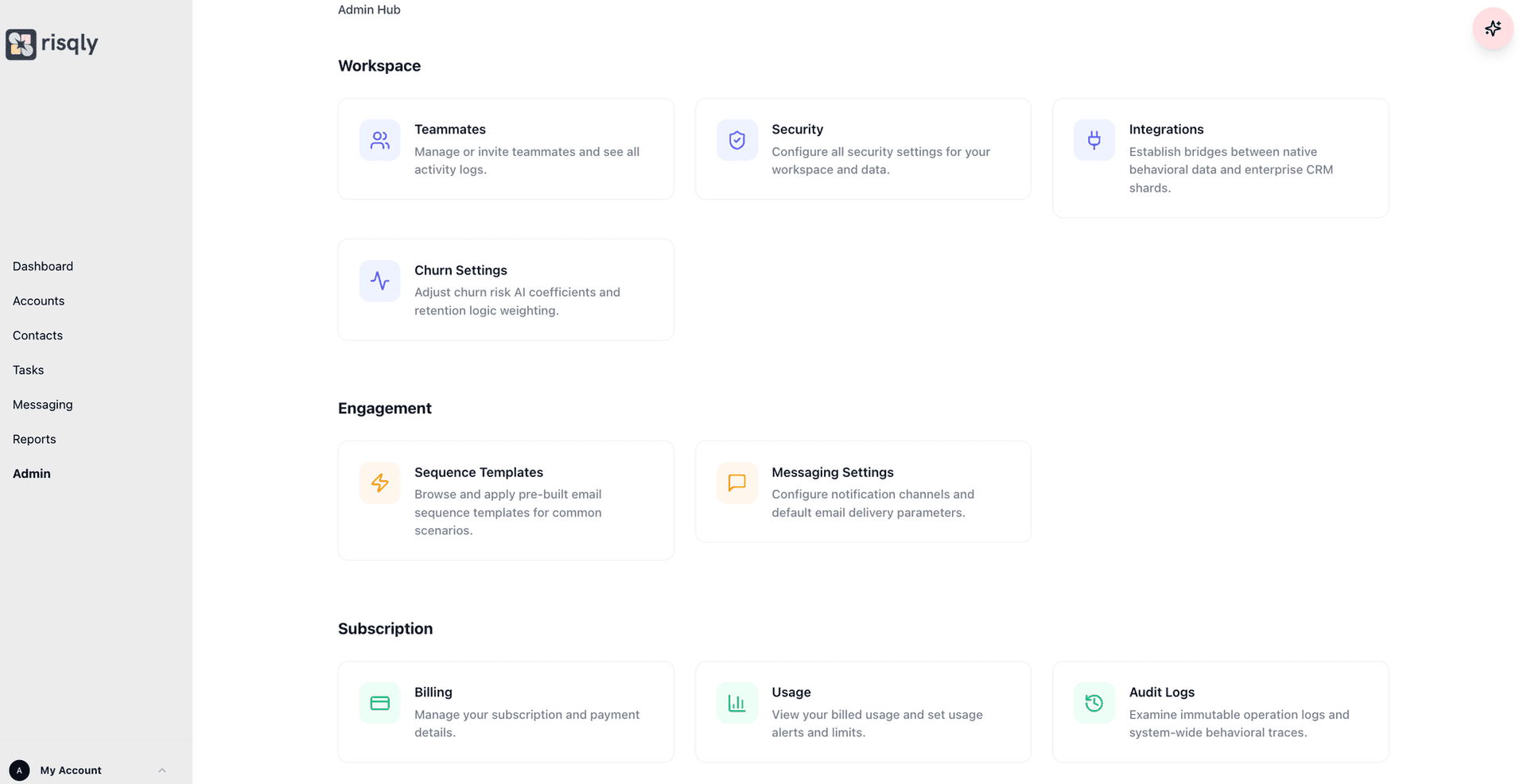
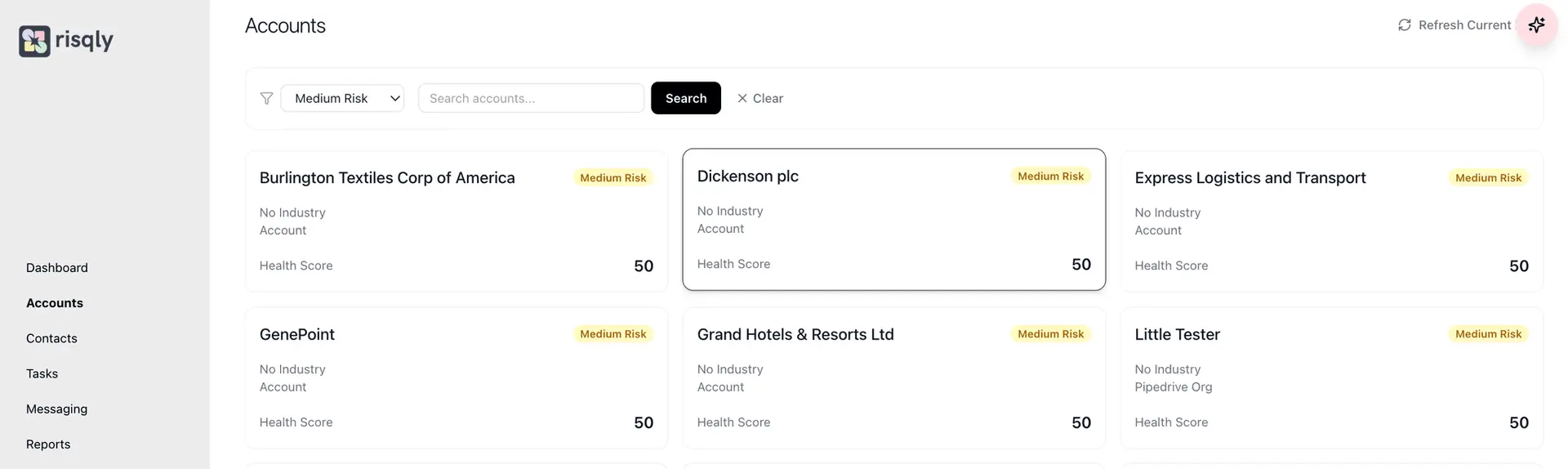
B2B SaaS teams move from reactive to proactive retention with Risqly. Customer data is unified across systems, enabling early identification of churn risk and clear insight into why accounts are at risk. Teams can prioritise the right actions, improve renewals, and drive measurable revenue impact. We deliver a unified view of customer data across CRM, billing, support, and product systems Predictive models that surface churn risk and renewal opportunities early. Risqly's explainable insights that highlight the drivers behind customer behaviour and automated workflows that enable immediate, scalable action across teams. When you partner with Risqly you add retention intelligence to your core offering. You'll be able to unlock new revenue streams and upsell opportunities. For scaling businesses you can prove impact with measurable churn and renewal outcomes.
Product Insights
Risqly provides B2B SaaS teams a unified web-based platform for retention intelligence by integrating CRM, billing, and support data. This free operating system identifies churn risks and renewal opportunities using predictive models to drive revenue impact.
- Unifies fragmented customer data across CRM, billing, support, and product systems into one view.
- Provides predictive churn risk surfacing and renewal opportunity identification.
- Delivers explainable insights that identify specific drivers of customer behavior.
- Supports automated workflows for scalable team actions on a free-to-use platform.
Ideal for: B2B SaaS companies and customer success teams needing to automate churn risk detection using data integration from multiple sources.
Screenshots
Reviews (2)
Average 4.5 out of 5
Based on 2 reviews


Comments (3)
How does the explainability layer actually surface drivers? Linear coefficients, SHAP-style attributions, or attention over recent events? Most "why is this account at risk" tools end up with labels CS teams don't trust.
Nice, wish you the best with this it look promising
We want to enable teams to spend more time strengthening relationships that will generate ARR, rather than being stuck in the data weeds.