
DollhouseMCP 2.0
Building blocks for AI customization + safe agent execution
Details
- Follow on
- @mickdarlingLinkedIn
- Use Cases
- AI AgentsAI AutomationLLM Security
- Target Audience
- AI DevelopersDevelopersIndie Hackers
- Pricing
- Free
About DollhouseMCP 2.0
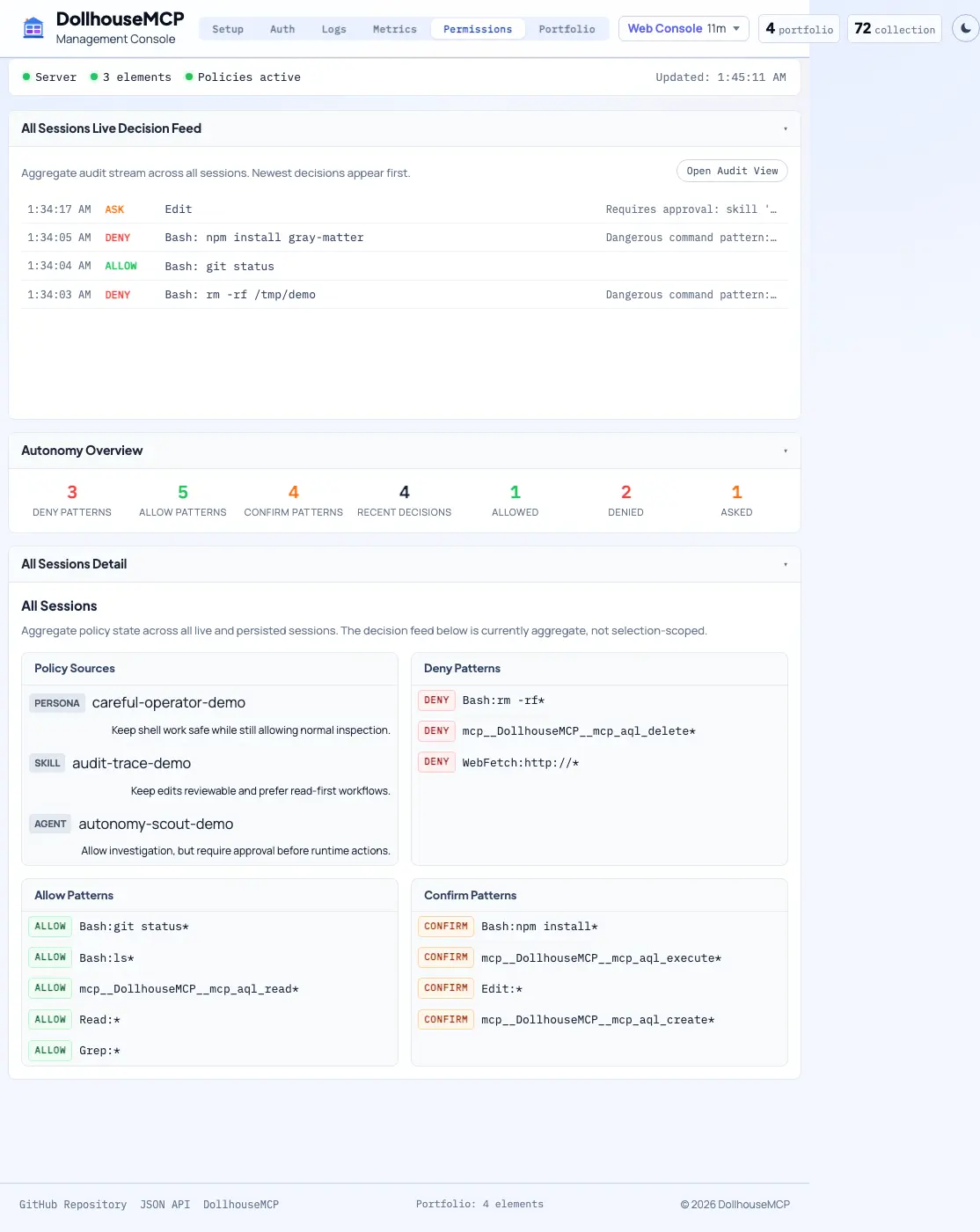
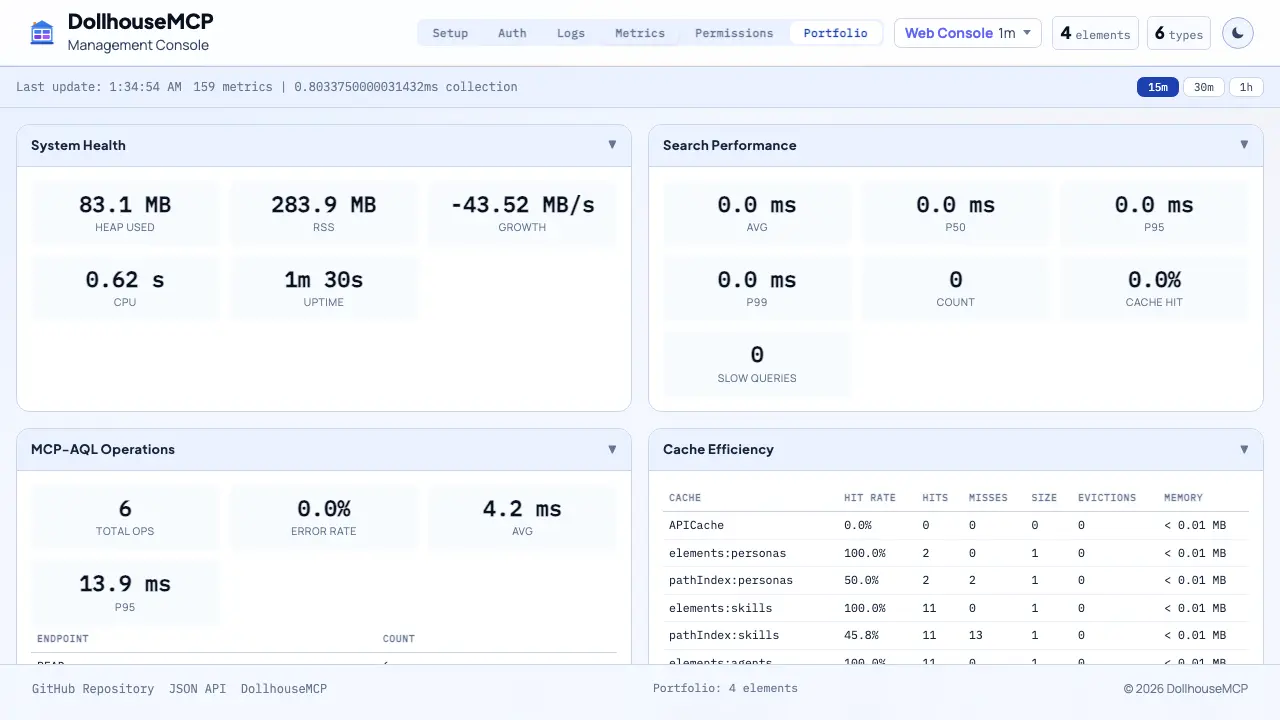
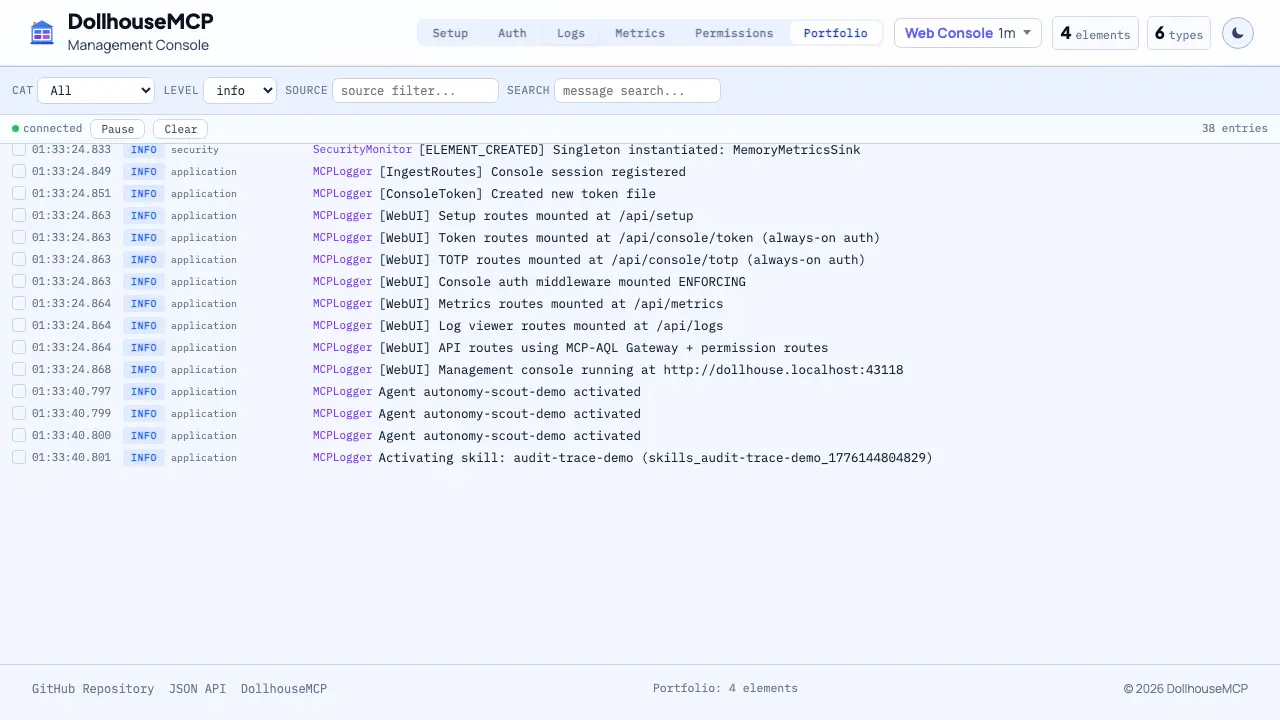
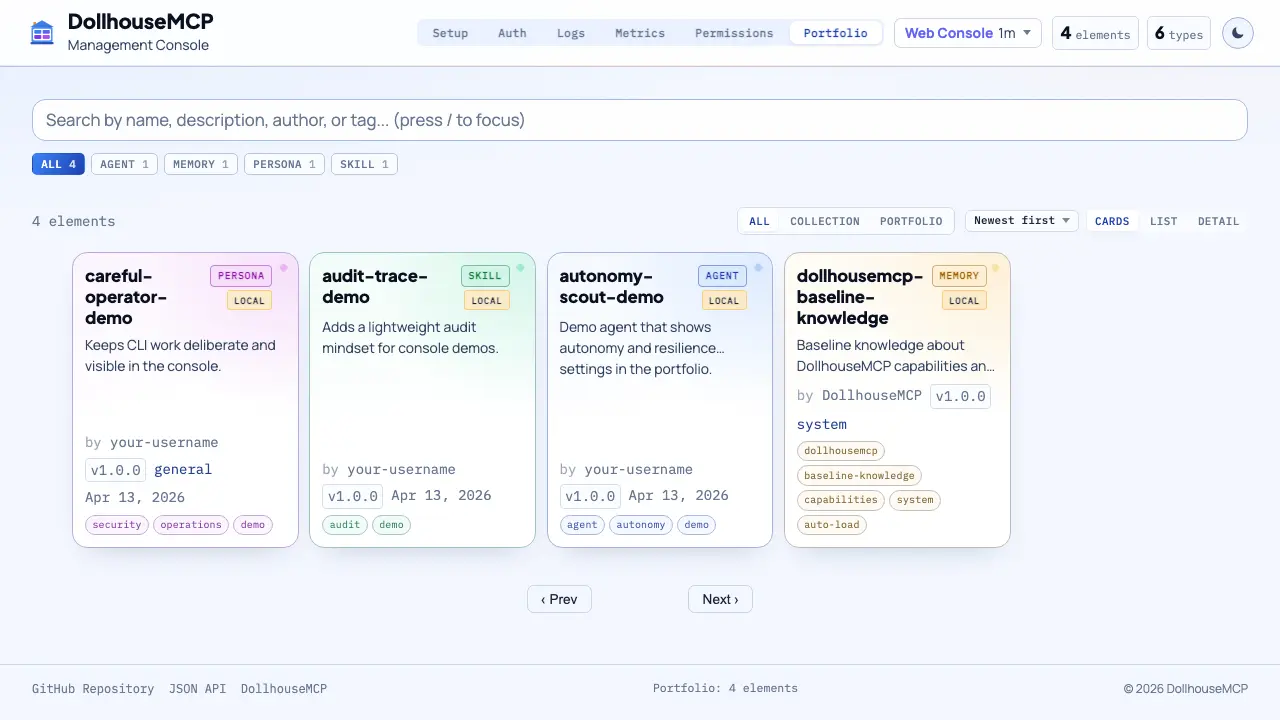
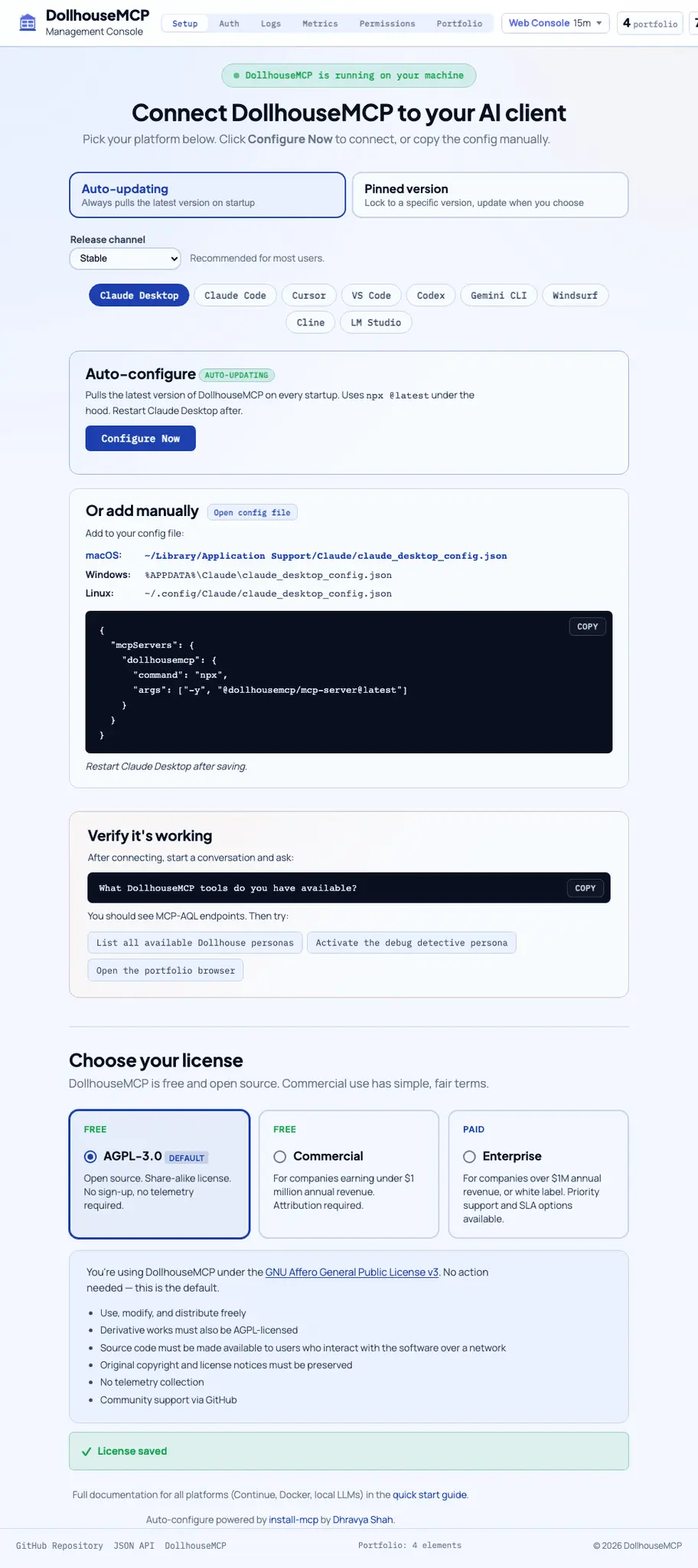
I built DollhouseMCP 2.0 because every AI session started blank and my prompts were trapped in one app's settings. It's an open-source MCP server that turns AI customizations into modular, composable building blocks you own, working with any MCP-compatible client. ## Six Element Types - Personas: behavioral profiles. How an AI sounds, what it cares about, how it responds. - Skills: discrete capabilities like running a release workflow or analyzing a profile. Compose across personas. - Templates: structured output formats for blog posts, LinkedIn carousels, press pitches, anything with a shape. - Agents: goal-oriented executors for multi-step tasks, with per-operation permission gating. - Memories: persistent context across sessions. Stored as structured YAML. - Ensembles: combine any mix of the above into a single activatable unit. A launch marketing ensemble might bundle a strategist persona, a copywriter, a platform-adapter skill, a social-post template, and a campaign memory. Activate once, everything comes online. ## Three-Tier Portfolio Local portfolio at ~/.dollhouse/portfolio/ (private, offline, runs entirely on your machine). Optional GitHub portfolio for backup and version control. Community collection at collection.dollhousemcp.com with 72 open elements today, open to contributions. Elements are Markdown with YAML frontmatter. Memories are YAML. ## Identity-Based Permissioning and the Bimodal Agent Loop When you activate a persona, skill, agent, or ensemble, its permission policy takes effect in the server. Same client, same LLM, different permission surface depending on which active elements are loaded. A read-only analyst persona blocks creates and deletes regardless of what the client allows. Policy runs server-side, after the client approves the call, so it cannot be overridden by the LLM or the client. Agents do not run free inside the LLM. Every step hands control back to the MCP server, which evaluates the proposed operation against the active permission stack, runs autonomy and risk checks, enforces hard blocks, then returns a decision with continue, pause, or escalate guidance. Higher autonomy without losing visibility or the ability to stop. ## MCP-AQL Protocol Layer DollhouseMCP uses MCP-AQL, a semantic routing protocol layer I also built, on top of MCP transport (STDIO today, streamable HTTP launching imminently). Preliminary public draft at mcpaql.com. Instead of exposing 70+ server operations as individual MCP tools, MCP-AQL groups them by semantic intent: Create, Read, Update, Delete, Execute. The full operation surface fits in roughly 4,000 tokens of context instead of tens of thousands. Operation intent (safe read vs. destructive delete) is explicit at the protocol layer instead of buried in prose. ## Supported MCP Clients Guided install for: Claude Desktop, Claude Code, Cursor, VS Code, Codex, Gemini CLI, Windsurf, Cline, LM Studio. One-command install: npx @dollhousemcp/mcp-server@latest --web opens the setup wizard. ## Works With OpenClaw and Other Open MCP Clients DollhouseMCP is MCP-protocol-native, so it works with any OpenClaw or OpenClaw-variant MCP client, plus any other MCP-compatible client. It adds three things those clients do not typically ship on their own: personality (consistent personas across sessions), capability (skills and agents you can add or mix per session), and customizability (templates, memories, ensembles that shape how the AI behaves, remembers, and works with you). The underlying client stays the same. DollhouseMCP adds the customization layer on top. ## Use Cases Packaging prompt libraries into portable, versioned personas. Composing multi-persona, multi-skill ensembles for launch marketing, research synthesis, or code review. Running goal-oriented agents with per-operation permission gating. Preserving project context across LLM sessions via memories. Favorite pattern: ask an LLM to do a deep-dive research pass on a topic, then assemble what it learned into a purpose-built ensemble. One request, and now you have a composable, activatable tool that crystallizes that topic into a set of elements you can call up any time. ## Local Web Console A local web console with five tabs: Setup (guided install), Portfolio (visual element browser), Logs (filterable streaming), Metrics (system health, MCP-AQL operations, cache, Gatekeeper trends, security counters), and Permissions (active policy stack plus a live Gatekeeper decision feed). ## Open Source AGPL-3.0 server, with a free commercial license available for teams needing proprietary, hosted, or enterprise procurement terms. The community collection uses per-element licensing, so contributors choose their own terms. ## Created By DollhouseMCP and the MCP-AQL protocol were both built by Mick Darling, founder of Dollhouse Research (dollhouseresearch.com). Product: dollhousemcp.com. Repository: github.com/DollhouseMCP/mcp-server. Collection: collection.dollhousemcp.com.
Product Insights
This open-source MCP server provides a modular framework for AI customization and secure agent execution across multiple desktop clients. It utilizes the MCP-AQL protocol to manage personas, skills, and agents through a server-side permission layer that operates independently of the LLM.
- Secure bimodal agent loop that enforces server-side permission gating on every operational step.
- Protocol-level efficiency using MCP-AQL to reduce context window usage to approximately 4,000 tokens.
- Broad client compatibility including Claude Desktop, Cursor, VS Code, and Gemini CLI.
- Flexible data ownership through local YAML storage with optional GitHub and community synchronization.
Ideal for: AI Developers and Indie Hackers who need to build and deploy composable, goal-oriented agents with strict security controls and persistent context.
Screenshots
Reviews (0)
I have built and used this everyday for 10 months. I have over 2000 Doollhouse Elements (Personas, Skills, Templates, Memories, Agents, and Ensembles) that work together to build fully functional applications like ElementalSurveys.com. You can check out prebuilt Elements in the Dollhouse Collection, and find links to all the related products on DollhouseResearch.com
Comments (1)
I'm excited to publicly launch DollhouseMCP 2.0. I built it to make AI more customizable and predictable at the same time and a lot safer. I'll answer as many questions as you have.