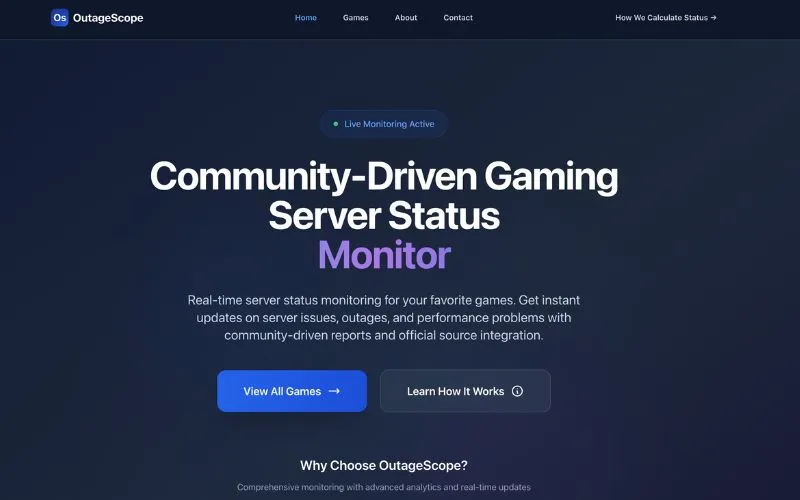
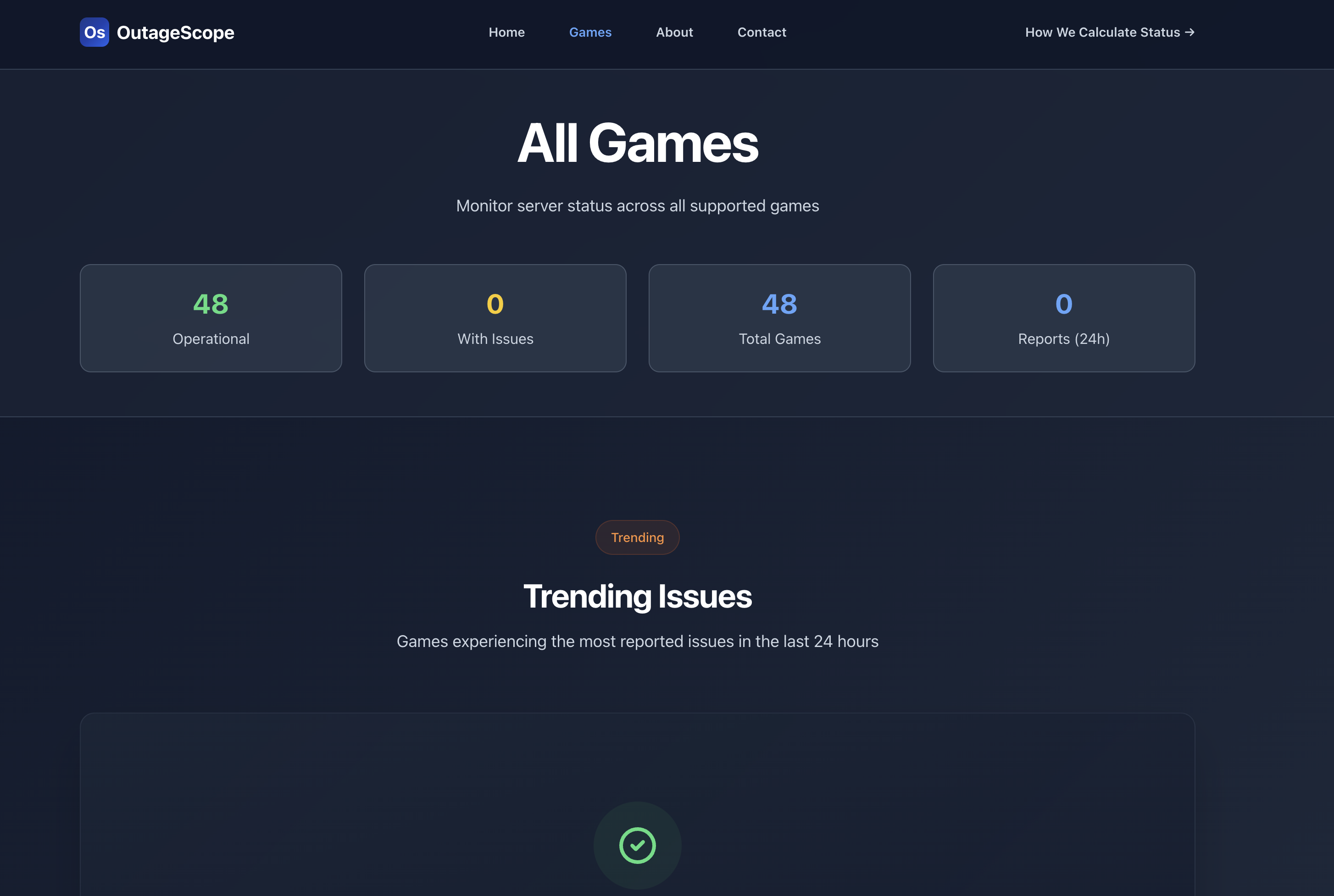
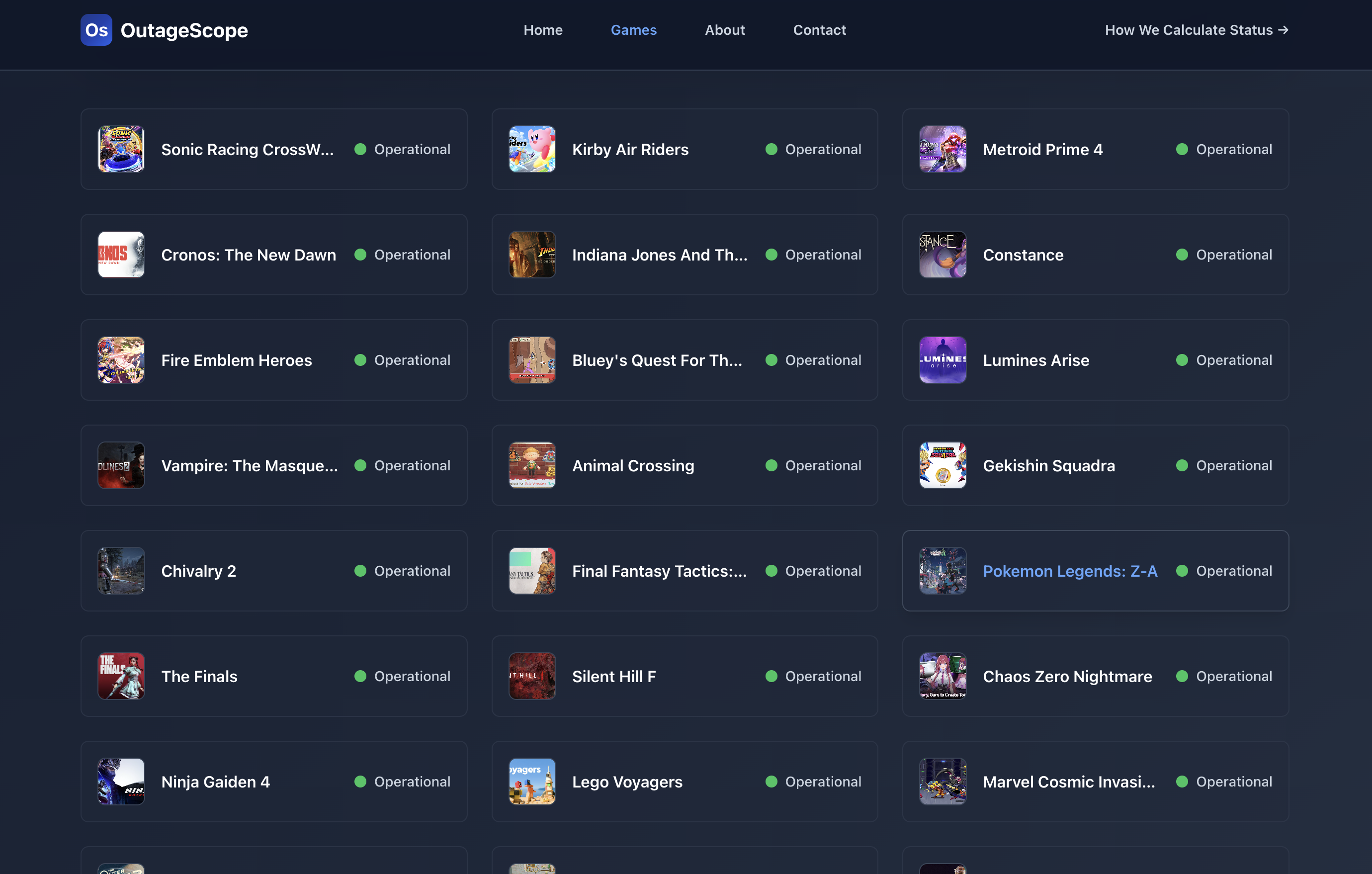
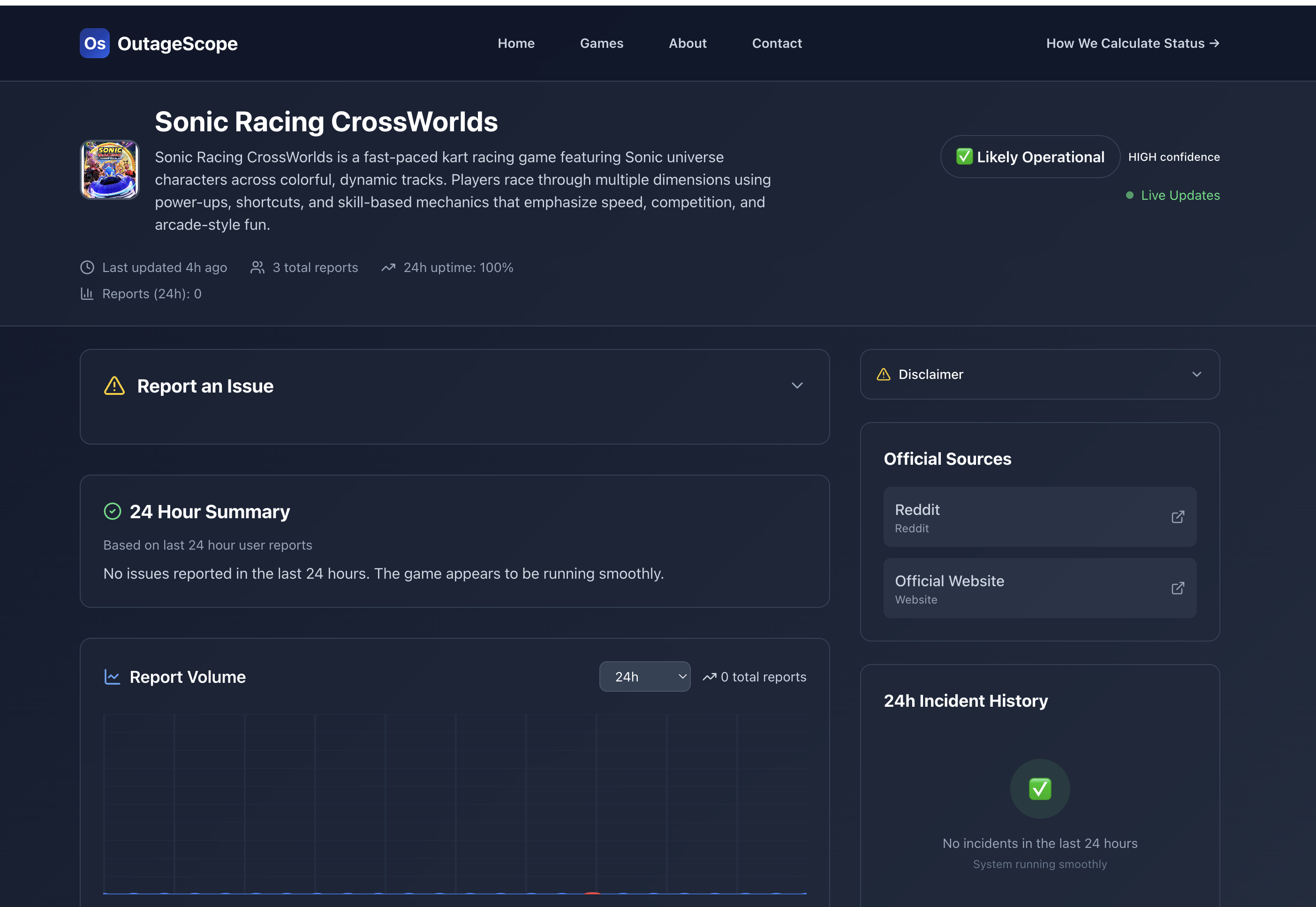
OutageScope is a community-driven gaming server status monitoring platform designed to help players quickly understand the health and operational status of online game servers in real time. Rather than relying solely on traditional infrastructure checks like pings or automated uptime tests, OutageScope combines user-submitted reports with advanced analytics to provide a more accurate and human-centered view of server performance and outages. This approach allows the platform to highlight real problems that gamers are experiencing on the ground, such as login failures, matchmaking issues, error codes, and other disruptions that may not be immediately visible through standard technical monitoring alone. At its core, OutageScope operates by collecting community reports from players who are actively encountering problems with game servers. These reports are processed using a transparent methodology that includes time-based pattern recognition, spike detection, confidence scoring, and correlation with official sources where available. By analyzing user reports over multiple time windows—such as 5 minutes, 1 hour, and 24 hours—the system can distinguish between isolated incidents and widespread issues, enabling more reliable status indications for each tracked game. This methodology ensures that server statuses are updated frequently and reflect real-world conditions experienced by the gaming community. The OutageScope homepage provides an overview of real-time monitoring, displaying the live status of all supported games. Users can see which titles are currently operational, which may be experiencing issues, and recent report activity submitted by other players. The platform also highlights trending issues, showing which games have received the most reports over various periods (e.g., the last 24 hours or 7 days), helping users identify patterns and potential problem areas quickly. OutageScope supports a growing list of games across multiple genres and platforms. On the dedicated Games page, users can browse all monitored titles and view individual status pages for each. These individual pages provide detailed breakdowns of recent report data, regional trends, platform-specific issues, and community comments. Players are encouraged to contribute by submitting reports if they encounter problems, making the platform more robust and responsive over time. To ensure the reliability of the data, OutageScope employs multiple verification and analysis techniques. User reports are evaluated to filter out noise and potential spam, with advanced analytics used to detect significant increases in report volume that may indicate actual service disruptions. Confidence levels are assigned to status updates to reflect the strength of the evidence supporting them, giving users clearer insight into how likely it is that a reported issue represents a real outage versus a localized glitch. The platform’s transparent calculation methodology offers visibility into how statuses are determined, explaining criteria for different status levels such as likely operational, possible issues, potential problems, and likely down. This transparency helps users understand not just what the current status is, but why it has been reported as such, fostering trust in the system’s assessments. OutageScope also integrates official sources where available, including links to social media channels and developer announcements, providing additional context around server issues and maintenance events. This multi-source approach enhances the platform’s accuracy and gives players a fuller picture of ongoing problems or scheduled downtime. Beyond its monitoring capabilities, OutageScope invites community engagement through the ability to suggest new games for coverage and leave feedback. Users can contact the team with suggestions, bug reports, or questions, fostering a collaborative environment where the platform can continue to grow and improve based on user needs. Privacy and data protection are also priorities for OutageScope. The platform’s privacy policy outlines how user data—such as report details and hashed IP addresses—is handled, emphasizing minimal data collection and secure storage practices to protect user privacy while still enabling effective report analysis.






Comments (2)
Nice, does this connect to Discord?
Just started my coding journey last year, and this is my first project, which I am very proud of.