Oxidiko
Ditch passwords. Secure One-tap login auth system

Details
- Target Audience
- DevelopersBackend DevelopersOpen Source Maintainers
About Oxidiko
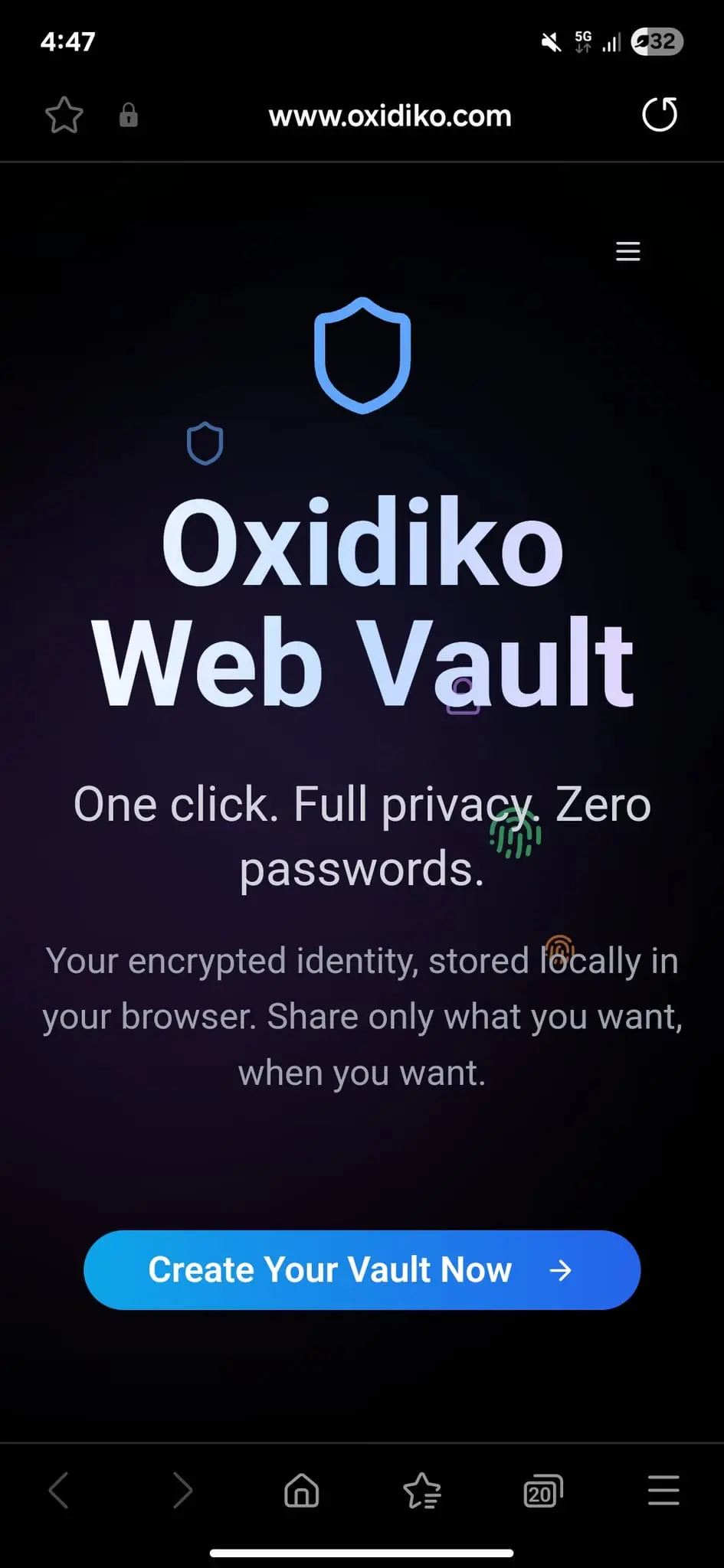
I recently built something I thought might help with privacy. It’s called Oxidiko: a serverless, privacy-first login system that removes passwords and lets users control what data (if any) they share. I made it because I got tired of the usual email/password leaks and centralized auth flows where you’re forced to trust whoever runs the server. The idea is: - no passwords to leak → users get a unique `oxidiko_id` derived from a passkey and optional fallback PIN - no centralized vault of emails or creds to hack - smaller attack surface → data stays local, nothing stored on my side - websites just verify a signed JWT with a public key → no secrets in transit It’s all open source, and I’d really appreciate feedback — especially criticism or suggestions. Links if you’re curious: - Docs: [https://oxidiko.com/docs](https://oxidiko.com/docs) - GitHub: [https://github.com/Oxidiko/Oxidko](https://github.com/Oxidiko/Oxidko) - Telegram: [https://t.me/oxidiko](https://t.me/oxidiko)
Product Insights
Oxidiko provides a serverless, open source authentication framework that replaces password-based systems with unique IDs derived from passkeys. It eliminates centralized credential storage to improve privacy for developers building web applications through a stateless JWT verification model.
- Open source codebase available on GitHub for full transparency and modification.
- Serverless architecture that removes the need for centralized email or credential databases.
- Stateless verification using signed JWTs and public keys to secure data in transit.
- Data privacy focus where user information stays local to reduce the attack surface.
Ideal for: Developers and backend developers who need a privacy-centric, passwordless authentication system for web application user onboarding.
Screenshots
Reviews (0)
No reviews yet. Be the first to rate this product!
Comments (1)
Very nice, love to see someone touching the topic of data leaks as well, though I believe they are generally a force for good
Yeah because my parents and I, along with millions of people got breached, and now our data is floating in the internet. Also, what do you mean by 'force for good'?